7 Powerful Facts About India’s Airspace Disruptions After Middle East Crisis Impact
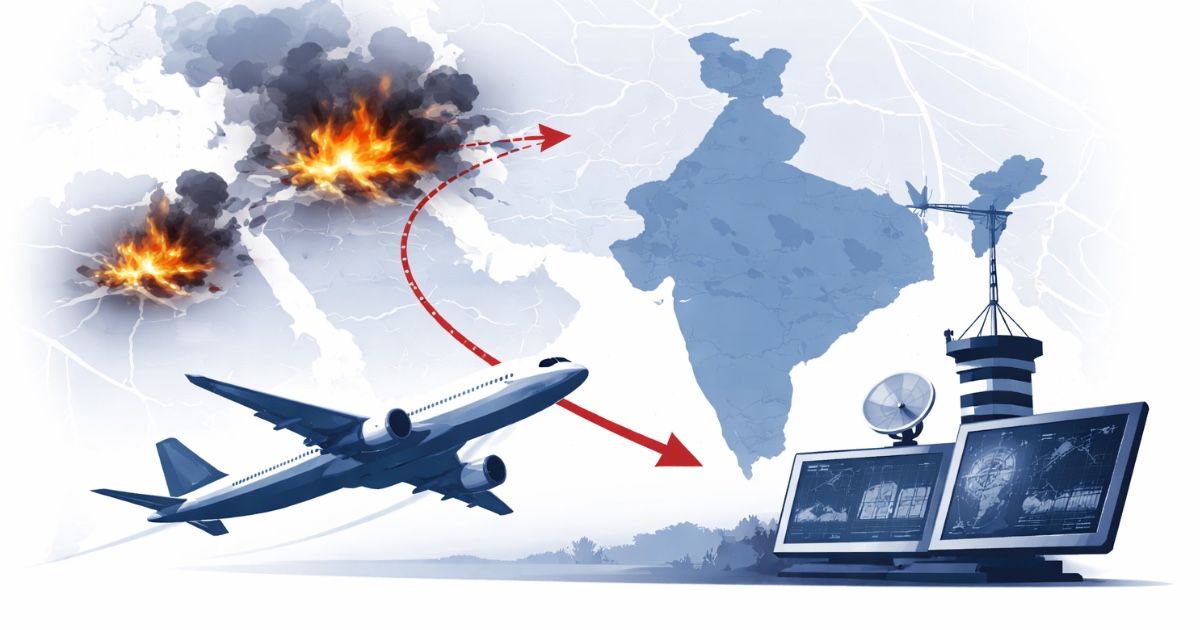
India’s aviation sector is facing fresh turbulence as rising tensions in parts of the Middle East disrupt global air routes. Indian airlines operate hundreds of international flights every week through West Asian airspace. Any sudden closure, rerouting, or military escalation in the region has a direct impact on flight schedules, fuel costs, and ticket prices.
the issue is not just about delayed flights. It affects trade, tourism, cargo movement, and millions of passengers travelling between India, Europe, North America, and the Gulf. With global air corridors under pressure, airlines are adjusting routes almost daily.
Here are seven powerful facts that explain how India’s airspace operations are being affected and why the situation matters now.
1. Indian Flights Depend Heavily on West Asian Airspace
A large share of India’s long-haul flights pass through Middle Eastern skies.
Flights from cities like Delhi, Mumbai, Bengaluru, and Hyderabad to Europe and North America usually cross parts of the Gulf region. This route is shorter and more fuel-efficient.
When tensions rise, some countries temporarily restrict or monitor airspace. Airlines must then take longer routes over the Arabian Sea or Central Asia.
This leads to:
- Longer flying time
- Higher fuel burn
- Crew rescheduling
- Operational strain
Even a small change in route can increase flight duration by 30 minutes to over 2 hours, depending on the sector.
2. Flight Durations Have Increased on Key International Routes
Indian carriers operating to London, Frankfurt, Toronto, and New York are among the most affected.
When airspace warnings are issued:
- Aircraft avoid conflict-prone zones
- Pilots follow alternate flight corridors
- Extra fuel is loaded as a safety buffer
These changes can increase operating costs significantly.
Longer routes also mean:
- Late arrivals
- Missed connections
- Extended duty hours for crew
For passengers, this results in schedule changes and sometimes higher fares.
3. Aviation Fuel Costs Rise With Rerouting
Aviation Turbine Fuel (ATF) is already one of the biggest expenses for airlines. In India, fuel accounts for around 35% to 40% of an airline’s total operating cost.
When flights take longer routes:
- Fuel consumption increases
- Airlines carry additional reserve fuel
- Load planning becomes complex
At the same time, global oil prices often react to Middle East tensions. If crude prices rise, ATF becomes more expensive.
Even a $5 to $10 per barrel increase in crude oil can put pressure on airline margins.
This is why airspace disruptions are closely linked to ticket pricing trends
4. Ticket Prices on International Routes May Increase
Indian travellers could see higher fares if disruptions continue.
Airlines adjust pricing based on:
- Operating cost
- Route length
- Fuel price movement
- Demand-supply balance
If rerouting becomes frequent, carriers may revise fares, especially on:
- India–Europe routes
- India–US routes
- India–Gulf routes
However, fare increases are not automatic. Airlines also compete heavily. If demand weakens, prices may remain stable despite cost pressures.
For now, industry observers say pricing will depend on how long the airspace situation continues.
5. Air Cargo and Trade Routes Are Also Affected
air cargo sector depends on smooth international connectivity.
High-value shipments such as:
- Electronics
- Pharmaceuticals
- Fresh produce
- Engineering goods
are often transported by air.
If flights take longer routes:
- Delivery timelines may shift
- Freight charges may rise
- Export planning becomes more complex
exporters rely heavily on Gulf transit hubs. Any regional tension creates uncertainty in cargo schedules.
While there is no full-scale shutdown, airlines are monitoring routes daily to avoid disruption to trade flows.
6. Indian Aviation Authorities Issue Safety Advisories
Safety remains the top priority.
aviation regulator and airlines closely monitor global aviation alerts. When required, they follow international safety advisories and adjust flight paths accordingly.
Airlines coordinate with:
- Global aviation bodies
- Air traffic control networks
- International route management systems
Pilots are trained to handle rerouting decisions in coordination with ground control.
Passengers should note that such changes are preventive measures. Airlines act early to avoid risk.
There is no indication of direct threat to airspace at this time. The focus is on precaution and operational safety.
7. Gulf Travel Demand Remains Strong Despite Tensions
The Middle East remains one of the busiest travel corridors for India.
Millions of Indians live and work in Gulf countries such as:
- United Arab Emirates
- Saudi Arabia
- Qatar
- Kuwait
- Oman
Daily flights operate between Indian metros and Gulf cities.
So far, commercial services to these destinations continue, though minor delays may occur if flight paths are adjusted.
Travel demand has remained steady, especially for:
- Business travel
- Family visits
- Religious travel
- Transit connections
Airlines are working to maintain schedules as smoothly as possible.
Why This Matters for Indian Travellers
India is one of the fastest-growing aviation markets in the world. In recent years, international passenger numbers have risen sharply.
Any airspace disruption can:
- Impact holiday plans
- Affect student travel
- Delay business trips
- Increase travel costs
Passengers are advised to:
- Check airline notifications before departure
- Arrive early at airports
- Monitor SMS or email alerts
- Stay updated on schedule changes
Most changes are handled in advance, and airlines usually inform passengers in case of significant delay.
Impact on Indian Airlines’ Financial Health
Indian carriers are already managing:
- Intense competition
- High fuel taxes
- Currency fluctuations
- Aircraft delivery delays
Airspace disruptions add another layer of operational pressure.
If tensions ease quickly, the impact may remain limited.
However, prolonged rerouting could affect:
- Profit margins
- International expansion plans
- Fleet deployment strategies
Airlines with larger wide-body fleets are more exposed to long-haul disruptions.
Global Context: Not the First Time Airspace Has Shifted
The aviation industry has faced similar situations before.
In past conflicts or regional crises, airlines worldwide had to:
- Avoid certain countries
- Redraw global routes
- Increase ticket prices temporarily
The system is designed to adapt quickly. Aviation authorities coordinate globally to ensure safety remains intact.
India’s aviation network is resilient, but global tensions always create ripple effects.
What Happens Next?
The situation remains dynamic.
Airlines are watching developments closely. Route decisions are reviewed regularly based on safety advisories.
If tensions reduce:
- Normal routes may resume
- Fuel costs may stabilize
- Ticket pricing pressure may ease
If tensions escalate:
- More rerouting may occur
- Flight times may increase further
- Operating costs may rise
For now, operations continue with caution.
The Bigger Picture for India’s Aviation Growth
India is targeting strong growth in international aviation over the next decade.
New aircraft orders, expanding airport infrastructure, and rising outbound travel show strong momentum.
However, global airspace stability remains crucial.
India’s location makes it dependent on international corridors linking Asia, Europe, and North America. Any instability in these regions affects connectivity.
Despite current disruptions, experts say India’s aviation growth story remains strong in the long term.
India’s airspace operations are feeling the ripple effects of Middle East tensions. While there is no major shutdown, airlines are adjusting routes as a precaution.
The key impacts include:
- Longer flight times
- Higher fuel consumption
- Possible fare pressure
- Operational challenges
For passengers, the best approach is to stay informed and plan with flexibility.
For airlines, safety remains the top concern.
As global tensions evolve, India’s aviation sector continues to adapt — balancing caution, cost, and connectivity in a changing airspace environment.
Edited by: Pushkarini Annabathula
Also Read : State of the Union 2026: 7 Powerful Moments That Sparked Intense Global Debate
Add republicpost.in as preferred source on google – Click Here
Last Updated on: Monday, March 2, 2026 3:53 pm by Republic Post Team | Published by: Republic Post Team on Monday, March 2, 2026 3:53 pm | News Categories: News
About The Author